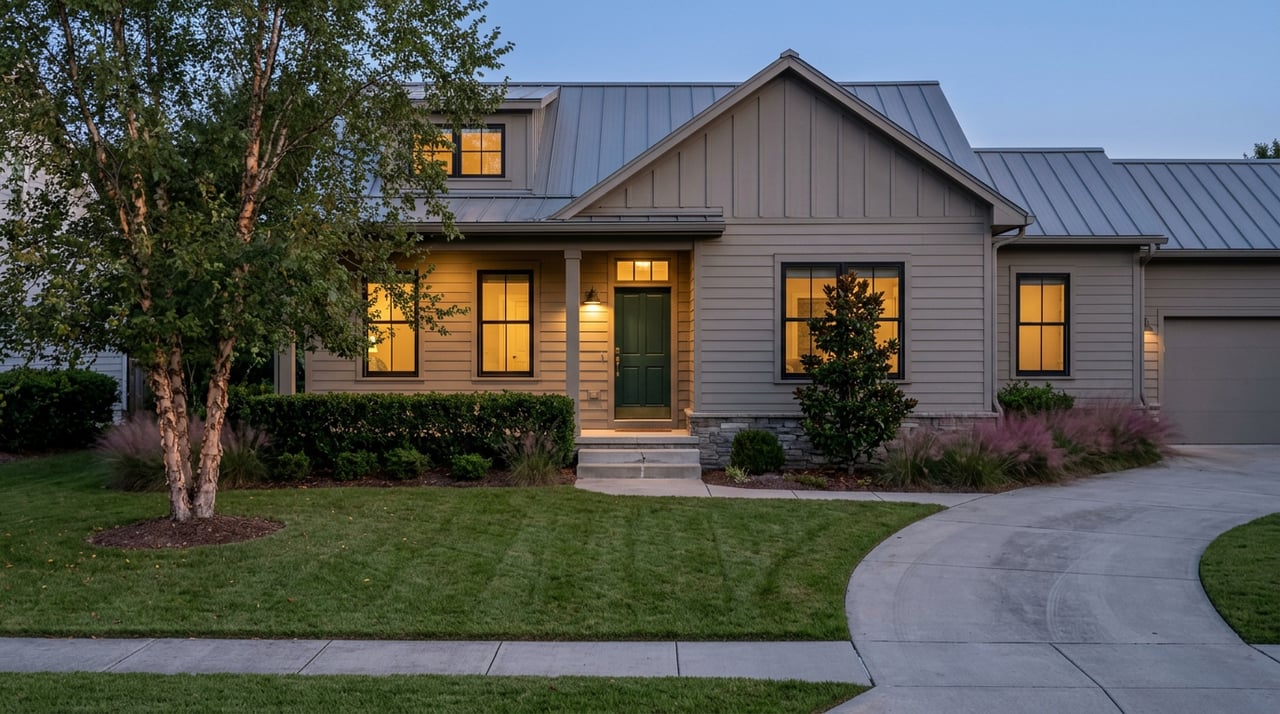
Clayton's Tax Rate Went Down. Many Bills Are Going Up Anyway.
September 17, 2026
September 17, 2026
Pull up almost any resale listing in Clayton right now and scroll to the tax line. It usually reads like reassurance: a modest, round number that makes the monthly payment math feel comfortable. For a home built in the early 2000s in a neighborhood like Riverwood or Glen Laurel, that number was probably accurate once. It may not be anymore, and the gap between what the listing shows and what you will actually owe has nothing to do with the seller hiding anything. It comes from a countywide correction that landed on every property in Johnston County at once, and it lands very differently depending on whether the home you are buying is old or brand new.
Johnston County's last full property revaluation was in 2019. State law only requires counties to redo one every eight years, but home values in the county had climbed so far past what the 2019 numbers reflected that the county moved its schedule up and completed a new revaluation effective January 1, 2025. When the results came back, countywide real property values had increased by 70.6 percent on average, according to the county's own summary of the process.
That is the kind of number that normally triggers outrage at a budget hearing, and the Johnston County Board of Commissioners responded by cutting the county tax rate from 67 cents to 52 cents per $100 of assessed value as part of the FY2025-2026 budget, a reduction the county itself called one of the largest rate cuts in its history. On paper, that sounds like relief. In practice, do the arithmetic on a property whose value rose by the countywide average: a 22 percent drop in the rate against a 70 percent jump in value still nets out to a noticeably higher bill. The rate cut softened the increase. It did not cancel it.
The Town of Clayton adds its own municipal rate on top of the county figure, currently 49 cents per $100. Add the two together and you get a combined rate of $1.01 per $100 of assessed value for anyone inside town limits, before any applicable fire district charge. A tax administrator quoted by WRAL around the time the reappraisal notices went out put the county's position plainly: values had drifted far enough from the market that the correction was overdue, whatever anxiety it caused when the notices landed.
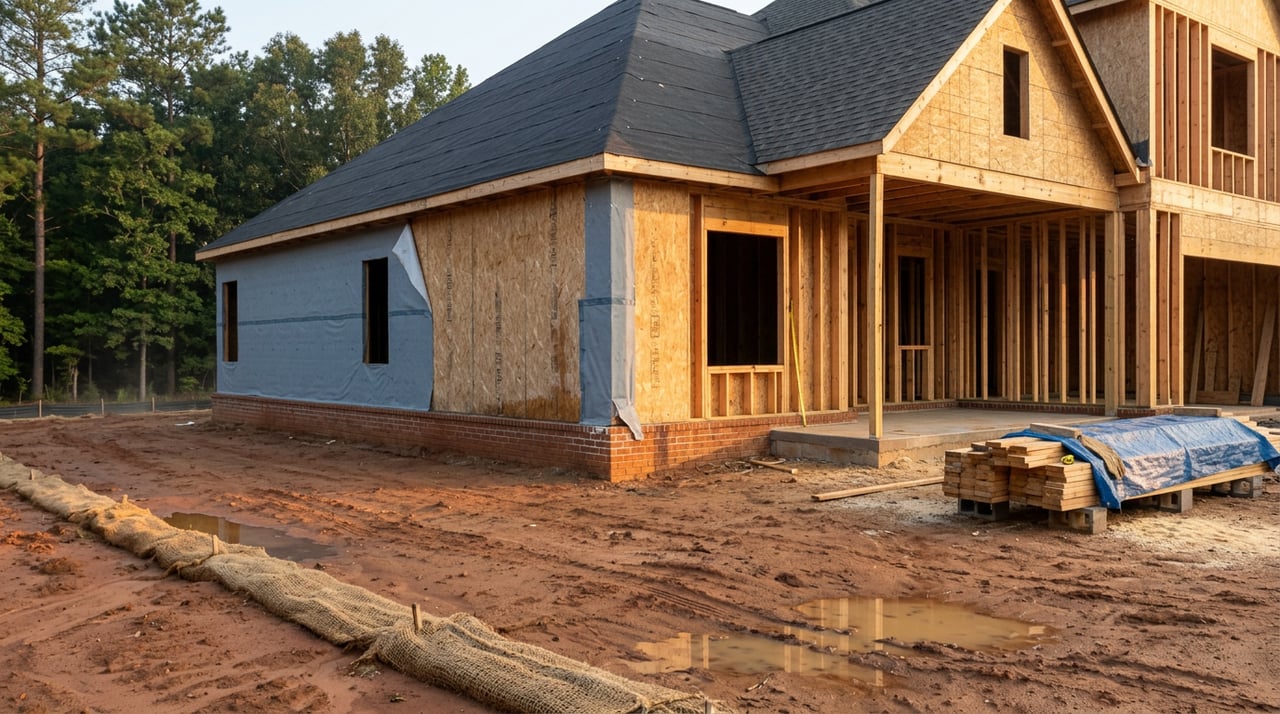
Revaluation resets happen on a schedule, county-wide, all at once. New construction is treated differently. Johnston County's own guidance notes that reassessed values generally hold steady until the next scheduled revaluation, with a short list of exceptions, and new construction is one of them. A home that didn't exist as taxable real property before the 2025 effective date gets assessed fresh, at something close to its actual completed value, when it's built.
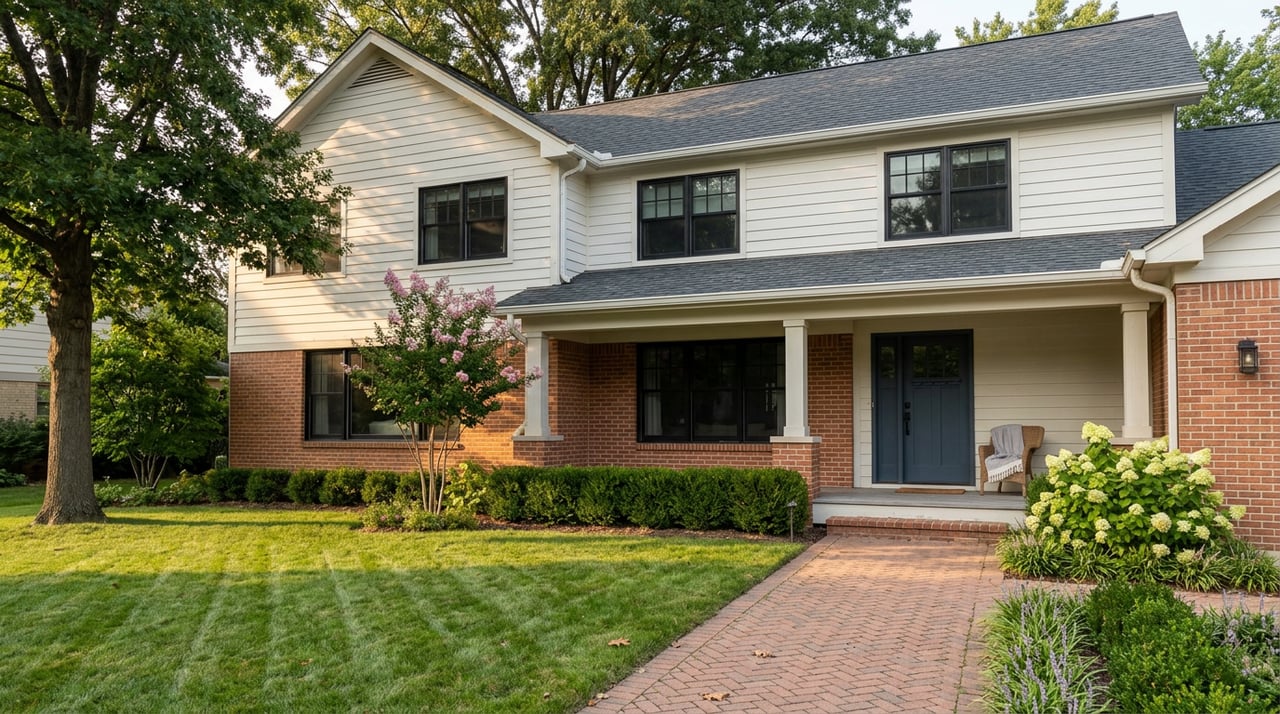
That distinction is the whole story here. An older home in one of Clayton's established neighborhoods, Riverwood's golf-course lots from the late 1990s and 2000s, the character homes in the downtown core, the Powhatan and US-70 corridor subdivisions, carried an assessed value for years that increasingly understated what the home was actually worth. That's normal. It's also exactly the gap a revaluation exists to close, and closing a multi-year gap all at once produces a bigger jump than most owners are used to seeing on a single tax bill.
A new-construction home in Flowers Plantation, Wellesley, or one of the newer phases going up along the town's growth corridors doesn't carry that same backlog. Its assessed value is set close to today's market at the point of completion, not corrected years later in one large step. Buyers touring a new build and buyers touring a 2008 resale are looking at homes that will be taxed on fundamentally different bases going forward, even if the sale prices land in the same range.
If you are comparing homes in Clayton, the tax figure printed on an older resale listing deserves a second look before you use it to budget a monthly payment. That figure sometimes reflects a bill calculated before the correction fully phased in, or it can simply be a stale field that hasn't been refreshed since the seller's last payment. The reliable version is the one you calculate yourself, using the combined rate and the property's current assessed value, which you can look up directly through Johnston County's tax records rather than trusting a third-party estimate.
Here is what that combined rate actually produces at a few price points, using the $1.01 per $100 in-town rate and ignoring any fire district add-on:
| Assessed value | Annual tax at combined $1.01 rate |
|---|---|
| $300,000 | $3,030 |
| $400,000 | $4,040 |
| $500,000 | $5,050 |
If the property sits outside Clayton's town limits but inside a county fire district, add that district's rate before you finalize the math. The countywide fire tax rate for this same budget cycle was set at 11.5 cents per $100, which is a meaningful add-on for buyers looking at land or acreage on the edges of town rather than an in-town lot.
The practical move for a buyer is simple: before you get attached to a monthly payment number, ask your agent to pull the current assessed value and run it through the actual combined rate, rather than accepting whatever figure is sitting in the listing history.
For a buyer comparing an older resale home against new construction at a similar price, the tax line is one more place where the two options aren't actually equivalent, even before you factor in the maintenance and warranty differences that come with an established versus a brand-new house. Build the corrected tax number into your comparison from the start rather than discovering it on your first bill.
For a seller in one of Clayton's established neighborhoods, the same correction is worth addressing head-on in your listing rather than leaving buyers to find the gap themselves. A current, accurate tax estimate next to the listing price removes a source of friction at exactly the moment a buyer is deciding whether to make an offer.
For anyone weighing land or a build-to-suit lot on the edges of town, the new-construction assessment timing works in your favor on the front end, since your eventual tax basis will reflect current values rather than a legacy figure. It's still worth confirming which fire district a given parcel falls into before you commit, since that add-on varies by location in a way the base county and town rates don't.
Does the revaluation mean my taxes went up every year since 2019? No. The correction happened once, effective January 1, 2025, closing several years of gap in a single step rather than gradually.
Will Clayton's town rate change again before the next revaluation? Possibly, since town and county boards set rates annually as part of their budget cycles, but the underlying assessed value generally stays fixed until the next scheduled countywide revaluation.
Is the 70.6 percent figure the same for every home in Clayton? No. That number is a countywide average. The county's own materials note that some areas, particularly rural parts of eastern and southern Johnston County, saw larger increases than others, so the only way to know your specific number is to check the actual assessed value on record for that parcel.
If you're weighing a resale home against new construction in Clayton this fall, or you're a seller wondering whether your listing's tax figure still holds up, it's worth running the real numbers before you're several offers deep. Enrich Realty can pull the current assessed value on a specific property and walk through what it actually means for your monthly payment. Reach out through our contact page to start that conversation, or browse our Clayton neighborhood guide for more on what's changing across town this year.
Stay up to date on the latest real estate trends.
Whether buying, selling, or investing, our team combines data-driven insights with hands-on guidance to ensure seamless, stress-free transactions. We believe real estate is more than property—it’s about creating opportunities, building wealth, and enriching lives.
Enrich Realty
Address 103 W South Railroad St Four Oaks NC 27524